


Ebenezer Tarubinga

I am an AI Research Engineer at Gractor, where I design and deploy computer vision systems for smart city infrastructure. Before that, I spent two years as a researcher at the Pattern Recognition & ML Lab at Korea University (MSc in AI, 2023–25), advised by Prof. Seong-Whan Lee, publishing first-author papers and filing an autonomous driving patent. I started my career as a software engineer at GliTech, shipping 10+ production projects and leading STEM education initiatives.

My work spans the full stack of AI—from research (semi-supervised segmentation, adversarial robustness, depth estimation) to engineering (real-time inference pipelines, edge deployment, production ML systems) to product delivery (full-cycle project management, cross-functional collaboration, stakeholder engagement).

Email  /  CV  /  Scholar  /  LinkedIn  /  GitHub

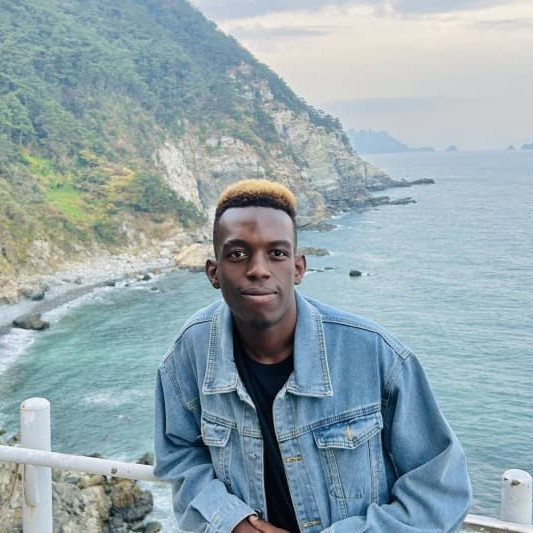
profile photo
Publications & Projects
/
CW-BASS
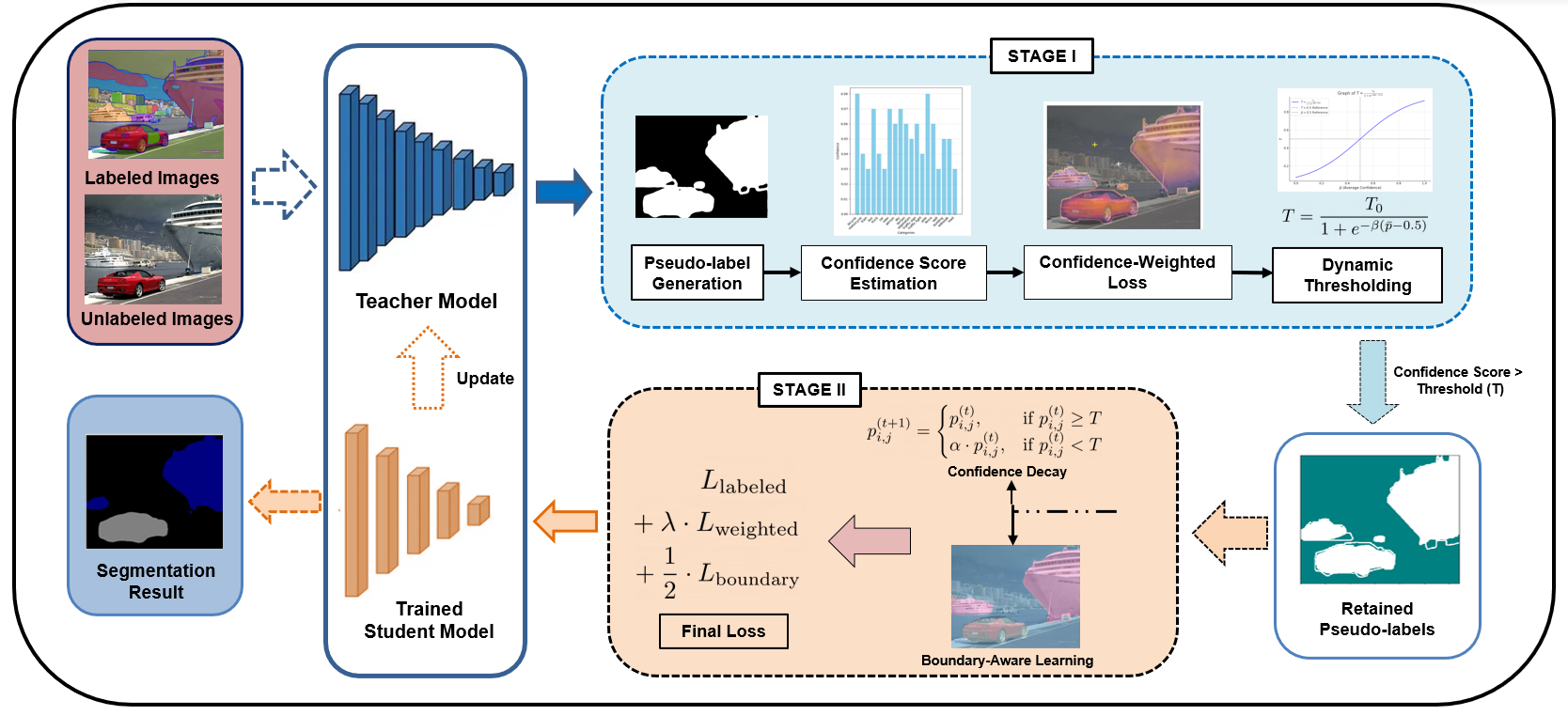
CW-BASS: Confidence-Weighted Boundary Aware Learning for Semi-Supervised Semantic Segmentation
Ebenezer Tarubinga, Jenifer Kalafatovich, Seong-Whan Lee
IJCNN 2025

Tackled boundary blur and confirmation bias using confidence-weighted pseudo-labels, dynamic thresholding, and a boundary-aware module. Achieves 65.9% mIoU on Cityscapes with only 100 labeled images.

FARCLUSS
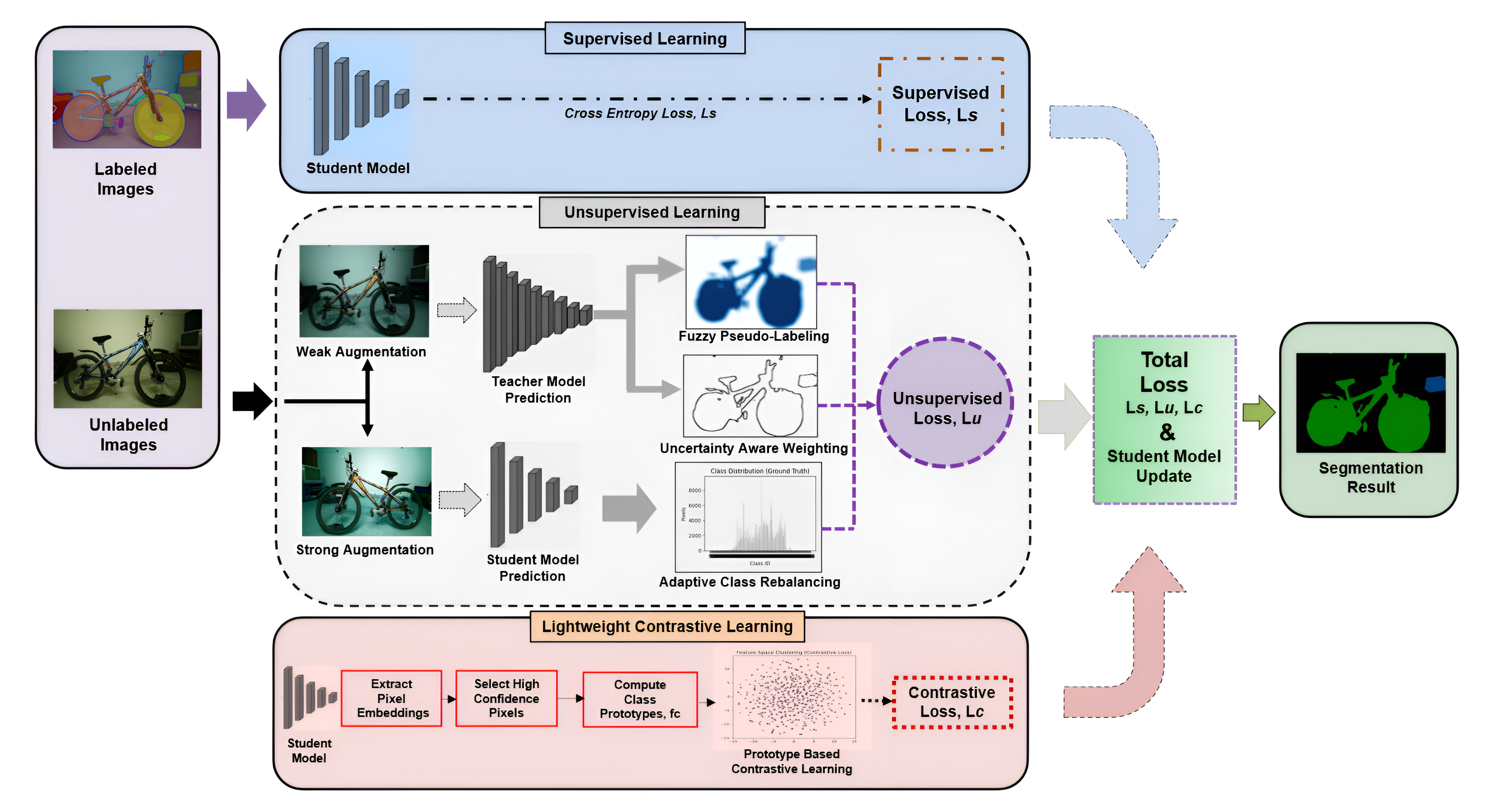
FARCLUSS: Fuzzy Adaptive Rebalancing and Contrastive Uncertainty Learning for Semi-Supervised Semantic Segmentation
Ebenezer Tarubinga, Jenifer Kalafatovich, Seong-Whan Lee
Neural Networks – Under Review

Introduced fuzzy pseudo-labeling, entropy-based weighting, adaptive class rebalancing, and lightweight contrastive regularization to improve generalization in semi-supervised semantic segmentation.

Computer Vision & Adversarial ML
Backdoor attacks
Dual-Embedding Guided Backdoor Attack on Multimodal Contrastive Learning
Liang et al., CVPR 2024

Studied stealthy backdoor triggers in CLIP-style models by aligning visual and textual embeddings in the joint representation space.

Multi-label attacks
Semantic-Aware Multi-Label Adversarial Attacks
Mahmood et al., CVPR 2024

Crafted targeted perturbations for multi-label classifiers that exploit semantic label co-occurrence dependencies.

Segmentation
Semi-Supervised Segmentation Baselines: UniMatch & ST++
Yang et al., CVPR 2022 / 2023

Systematic evaluation of weak-to-strong consistency and self-training techniques that served as the foundation for CW-BASS and FARCLUSS.

Depth estimation
Monocular Depth Estimation for Autonomous Driving
Yang et al., NeurIPS 2024

Depth estimation and point cloud generation for autonomous driving applications using Depth Anything V2, with an improved depth-to-pointcloud pipeline.

NeRF scenes
Scalable Urban Dynamic Scenes
Turki et al., CVPR 2023

Multi-branch hash tables and NeRF-style encoding for large-scale dynamic urban scene reconstruction.

Speech recognition
Speech Emotion Recognition
Wu et al., ICASSP 2023

Bi-GRU with self-attention for classifying emotions from audio and text signals.

Image generation
Text-to-Image Generation
Various

Comparative study of autoregressive, controllable, and diffusion-based approaches to text-conditioned image generation.

Reinforcement Learning
Reinforcement learning
Aligning Segment Anything Model to Open Context via RL
Huang et al., CVPR 2024

Automatic SAM prompting with a reinforcement learning agent for diverse segmentation tasks.

Reinforcement learning
Tool-Augmented Reward Modeling (Themis)
Li et al., ICLR 2024

Integrating external APIs into reward models for more accurate and transparent decision processes.

Medical Imaging
Medical imaging
ASD Classification with Multi-Site fMRI Data
Kunda et al., IEEE TMI 2022

Second-order functional connectivity embedding with domain adaptation for autism detection across diverse clinical sites.

Medical imaging
Mutual Correction Framework for Semi-Supervised Medical Image Segmentation
Wang et al., CVPR 2023

Mutual correction framework for refining medical segmentation masks and mitigating confirmation bias with limited annotations.

Large Language Models
LLM context
Why Does the Effective Context Length of LLMs Fall Short?
An et al., ICLR 2025

Investigated the gap between declared and effective context length in LLMs, analyzing positional-encoding biases and the STRING shifting method.

Software Engineering
AgriLet
AgriLet — AI Crop Disease Detection & Education Platform
GliTech · Full-Stack Application

AI-powered crop disease identification with severity scoring, 6 structured learning modules, community data contributions, and downloadable agricultural datasets. Built with React, TypeScript, Express, and Prisma.

eLearn
eLearn — E-Learning Platform for O/A Level Exam Prep
GliTech · Full-Stack Application

20+ subjects, 70+ lessons, progress tracking with study streaks, learning analytics dashboard, and personalized settings. Built with React, TypeScript, Express, and Prisma.

Digital Twin
3D Digital Twin Traffic Management System
Gractor · Production System

Edge AI-based real-time traffic monitoring with Three.js 3D visualization, predictive analytics, and smart city integration. Built with React, TypeScript, Three.js, and FastAPI.

Experience
Gractor

AI Research Engineer
Gractor · Seoul, Korea
Sept 2025 – present

  • Designing and deploying AIoT computer vision solutions for smart city systems.
  • Developing real-time CV and ML models for production environments.
  • Integrating ML pipelines with cross-functional engineering teams.
Korea University

ML Research Engineer
Pattern Recognition & ML Lab, Korea University · Seoul, Korea
Aug 2023 – Aug 2025

  • Published 2 first-author papers; segmentation models outperforming baselines by up to 25% mIoU.
  • Collaborated with industry partners on R&D, filing an autonomous driving patent.
  • Developed object detection, tracking, depth estimation, and dense matching pipelines.
GliT

Software & AI Engineer
GliT · Hybrid
Jan 2019 – Jan 2021

  • Led tech strategy and shipped 10+ full-cycle projects including AgriLet (AI crop disease detection) and eLearn (exam prep platform).
  • Built and deployed AI-powered applications using React, TypeScript, Node.js, and Python.
  • Launched Innovation Hub clubs engaging 250+ students; 35% STEM participation increase.
Education
Korea University

Korea University
Master of Science, Artificial Intelligence
2023 – 2025
Advisor: Prof. Seong-Whan Lee · Global Korea Scholarship

Skills
Vision Semantic Segmentation Object Detection Depth Estimation Tracking Scene Classification
Frameworks PyTorch TensorFlow OpenCV CUDA ONNX Docker MLflow
Languages Python C++ C# Bash Java
Infra NVIDIA Jetson CI/CD GitHub Actions Agile
Certificates
IBM Applied AI Professional Certificate
Modern Robotics Specialization – Northwestern
Foundations of Project Management – Google
Semantic Segmentation with SageMaker – Amazon
AWS S3 Basics – Amazon Web Services
ML Pipelines with Azure ML Studio – Microsoft
Neuroscience – Emory University
Game Development using Scratch – MIT

Template based on Jon Barron's website.